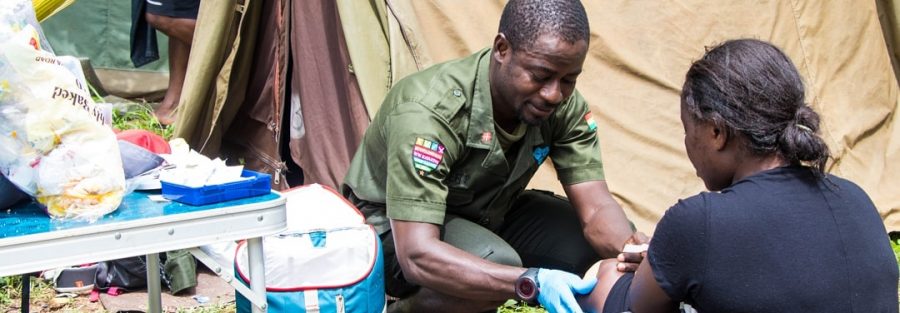
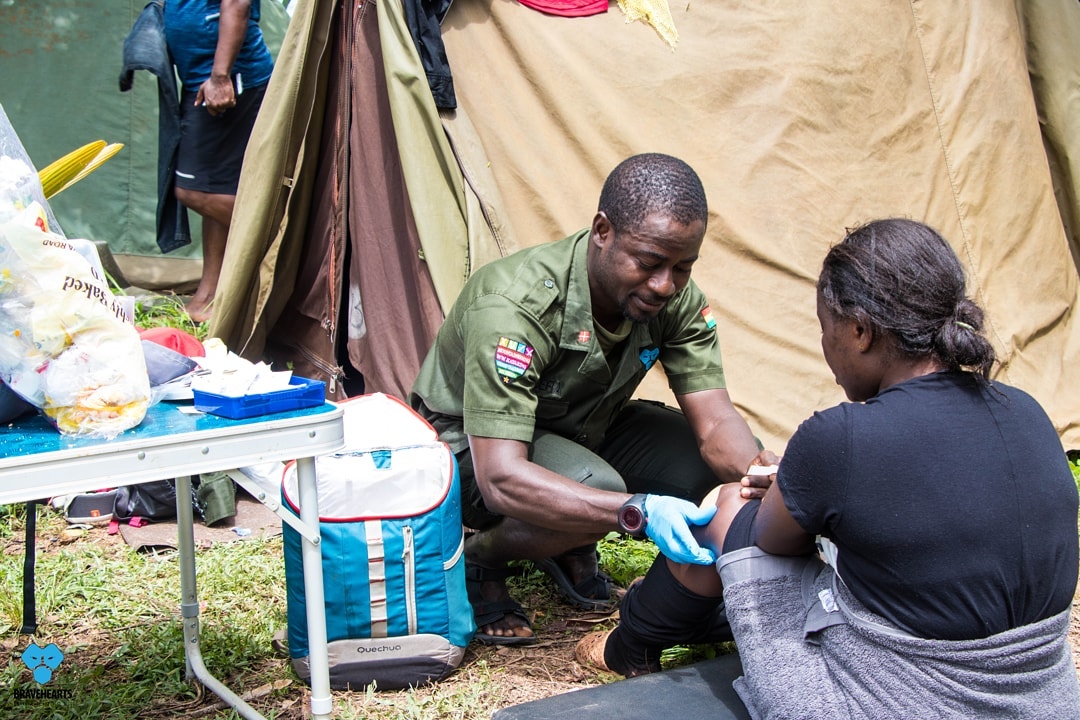
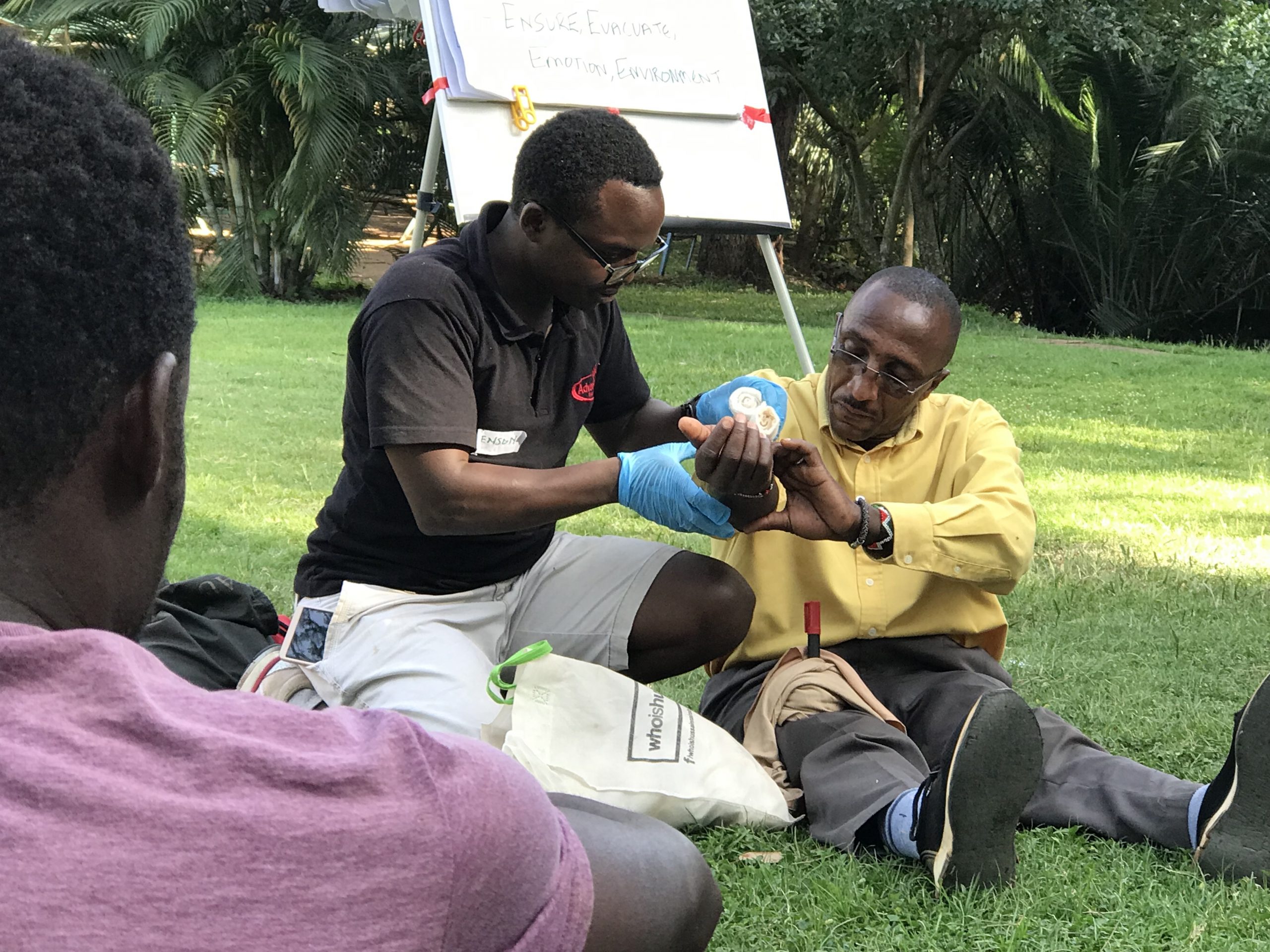
The OAG Wilderness First Responder (OAGWFR) course is the compulsory medical training for all outdoor adventure operators, expedition rangers and guides, professional search-and-rescue teams, and those involved in disaster relief under the OAG. Without this certification, no one can be licensed under an OAG adventure discipline. The course provides essential training in wilderness medicine, leadership, and critical thinking for professionals and leaders who work and travel in outdoor, low-resource, and remote environments. The OAGWFR curriculum is comprehensive and practical, involving a minimum of 70 hours of virtual and practical instruction. During the course, students learn the essential principles and skills required to assess and manage medical problems in isolated and extreme environments for days and weeks if necessary.
To earn certification, students must meet the criteria outlined in the OAG Wilderness First Responder Manual, as well as the minimum OAGWFR performance and testing standards by the end of the course. Upon successful completion of the course, students will receive Wilderness First Responder certification and CPR certification at an equivalent health care provider level.
OAGWFR Learning Modules
The OAGWFR course includes an e-learning module and an in-person module. The e-learning module requires 30+ hours of online, computer-based learning that must be completed before participating in the 9+ hours of in-person learning over the course of a day. The course is suited for those new to wilderness medicine as well as for those with some previous medical experience. The online learning modules are designed with multiple learning preferences in mind. Interactive videos, readings, self-practice assignments, quizzes, and case studies prepare students to apply the curriculum during in-person drills and scenarios. Students are expected to have a working knowledge of computers and access to high-speed Internet. Students must register at least two weeks before the in-person course date to receive access to and adequately complete the required online coursework.
Dates, Costs & Assessments
The OAGWFR 001 course runs online from Monday, August 3 to Wednesday, August 5, and in person at the Enclave, Truba, near Kumasi, on Monday, August 10, 2026, from 8 AM until 5 PM, and costs 500 GHS. The Assessment cost is part of the Training Course. The assessment consists of a written exam and a practical field assessment during the in-person training.
“OAG wilderness first responders are trained individuals who, in the early stages of an incident, are responsible for the protection and preservation of life, property, evidence, and the environment, as well as emergency management, public health, and clinical care. These skilled personnel provide immediate support services during prevention, response, and emergency recovery operations.” Dr. Emmanuel Boakye
Participant Requirements
The following qualifications, competencies, and tasks are required of wilderness first responders. Wilderness First Responder certification will be issued only to students who meet these requirements. Students who participate in a course and pass all written and practical exams but do not meet the following qualifications, competencies, and tasks may receive a Letter of Successful Completion in place of a certification:
1. You must meet the required minimum age of 16 for the course for which you are registering by the first day of that course. If you are under 18 years of age, written proof of parental/guardian consent is required.
2. You must have the ability to communicate effectively with instructors, classmates, coworkers, and other rescue personnel; calculate medication dosages based on body weight/mass; interview patients, family members, and bystanders; document all relevant information in the prescribed format; and perform the physical and diagnostic skills required for the level of certification. For the OAGWFR 002 and 003 certification levels, the required skills also include measuring blood pressure and assessing lung sounds.
3. You must have the ability to assist in lifting, carrying, and balancing a person weighing up to 300 pounds (136 kilograms). You must possess the dexterity necessary to perform all tasks related to the highest quality patient care. You must have the ability to access another
person on uneven terrain, to work in confined spaces, and to work in extreme environmental conditions.
4. You must have the ability to use good judgment and remain calm in high-stress situations.
5. You must complete written exams and practical assessments conducted by OAG Wilderness Medicine instructors.
Competency Areas
1. You must demonstrate competency in assessing a patient, handling emergencies, and utilising Basic Life Support equipment and procedures to the level of certification.
2. You must be able to assess lung sounds at the OAGWFR 002 and 003 certification levels.
3. You must demonstrate the ability to perform CPR, control haemorrhage, properly assess and stabilise an injured spine, manage fractures and other musculoskeletal injuries, reduce simple dislocations, cleanse, and dress wounds, and manage environmental emergencies.
Description of Tasks
Below is a generalised summary of tasks a wilderness first responder may perform. When performing these tasks, the wilderness first responder is expected to provide high-quality patient care while exercising discretion and professionalism. This includes, but is not limited to, acknowledging and practising respect for the patient’s rights and privacy. A certified wilderness first responder:
1. Determines the nature and extent of illness or injury, measures pulse rates and blood pressure, assesses respiratory status, observes changes in skin colour, searches for medical alert identification, establishes priority for emergency care, and renders appropriate care to competency level. For the OAGWFR 002 and 003 certification levels, tasks also include measuring blood pressure and assessing lung sounds.
2. Accesses and assists in the extrication of a patient from an entrapment. Is knowledgeable and able to use or assist in the use of accepted rescue and medical techniques, procedures, and devices as needed. Assists in evacuating patient to an ambulance or medical facility. Uses accepted emergency medical techniques, procedures, and devices.
3. Reports nature and extent of illness or injury to ambulance personnel or receiving facility. Establishes on-line medical control as needed. Continually reassesses patient during evacuation and provides care as needed.
4. Can work in extreme environmental conditions and various terrains. Documents and reports in the prescribed format to ambulance or hospital personnel.
Equipment
The OAG will provide all group and specialist equipment for this course, but students are to bring their own equipment where necessary. Students are required to have their own suitable outdoor clothing and footwear and to pack according to the list below as a guide. Meals, water and tent-camping equipment are included in the fee. Return transport to the training location is each participant’s responsibility:
- A 10-litre day pack
- A pair of good hiking boots
- Outdoor walking sandals
- A cap or hat
- 2 water bottles
- 2 sets of outdoor clothing
- A can of insect repellent
- A box of matchsticks
- Raincoat
- 1 machete
- Hiking poles
- A compass
How to Apply
Fill out the OAG Wilderness First Responder Course Application. It has all the information you need to provide to be a candidate for the Course.